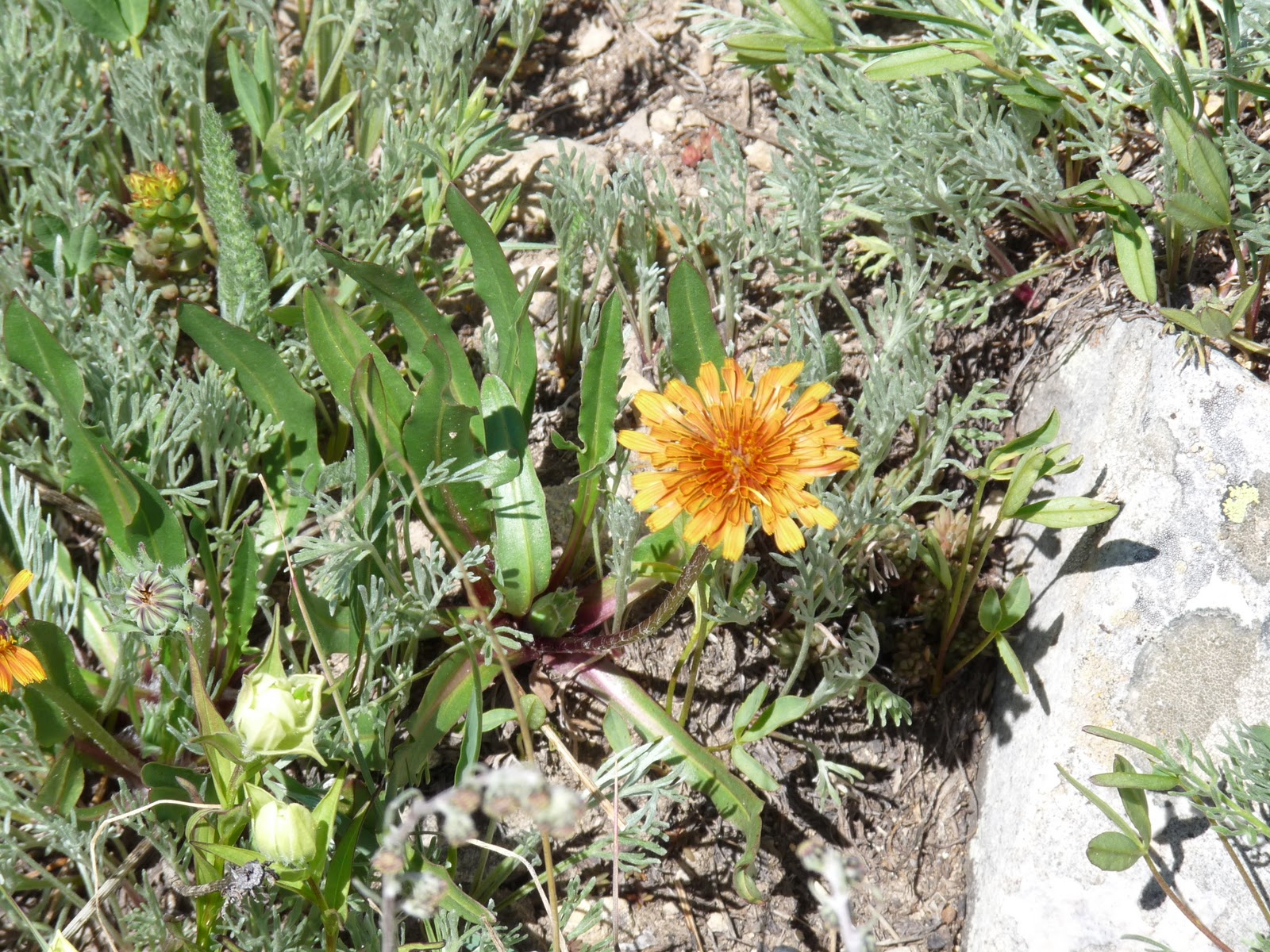
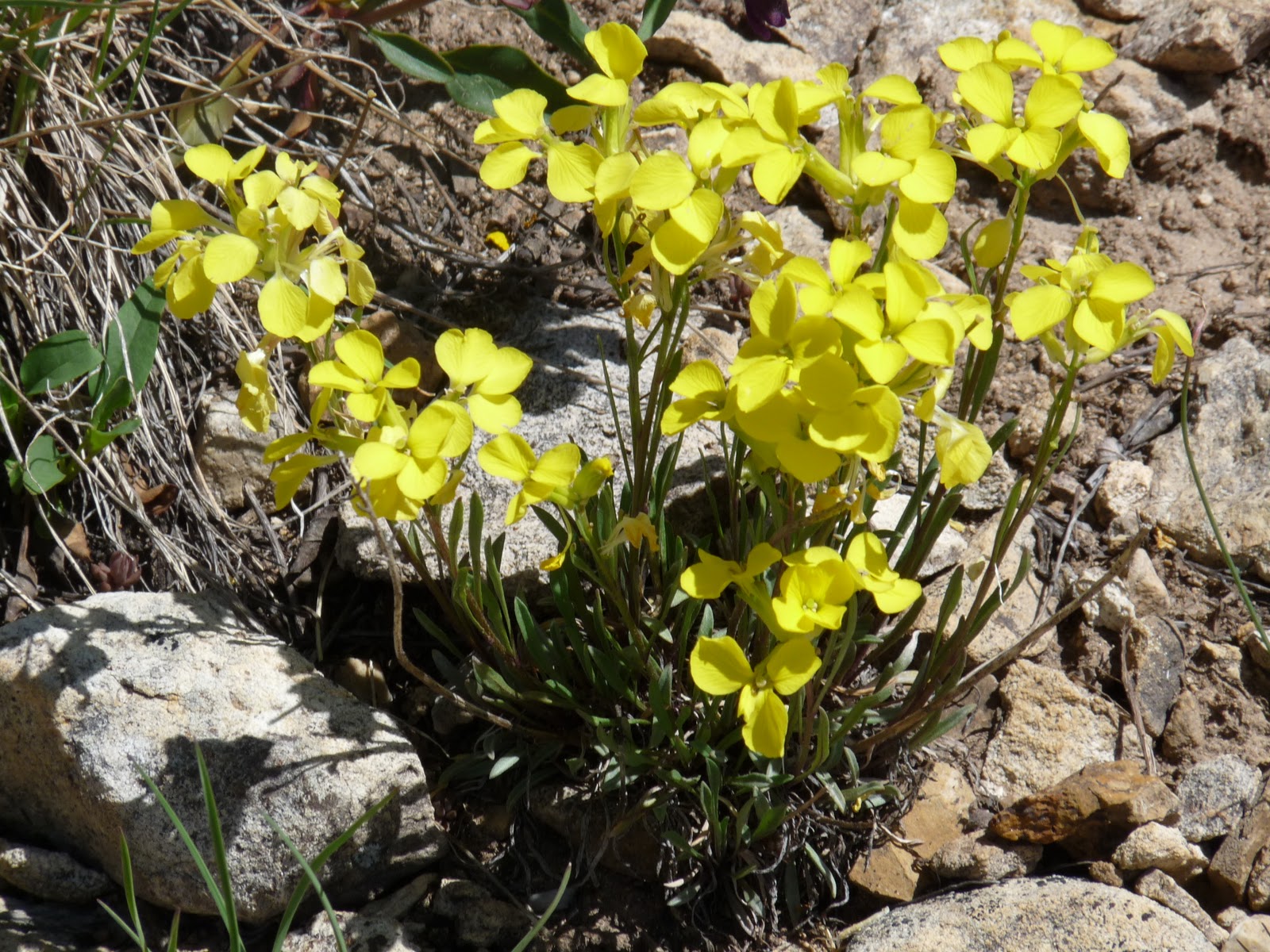
A couple of days after arriving in Denver, I and several staff from the Denver Botanic Gardens were walking a long winding trail up Horseshoe Mountain. To reach the mountain we drove west into the Rockymountains (which are visible from Denver), then cut southwest, I think, across a large flat plateau area with cows and much grassland before reaching the mountain base. The base had lots of conifers and some forest wildflowers, but we parked at the transition zone where the conifers end and the only woody plants are some Salix bushes and potentilla species. We soon passed that zone and entered the true alpine zone, where a veritable feast of flowers awaited. Thanks to good rains and a late season, the flowers were at peak. I was astonished at the diversity, we just don't have this kind of floral diversity out east. In the pics above, we see first the mountain itself, with its distinctive horseshoe marking. Next is a shot of two hemiparasitic plants, a pinkish purple Pedicularis, possibly P. sudetica var. scopulorum. Alongside grows one of the numerous Castillejas, C.occidentalis flaunts its large creamy bracts. Third is the agave like rosette, though far less menacing, of Frasera speciosa, a strange member of the Gentianaceae that must grow for many years before erupting into a final fountain of greenish white flowers, setting masses of seed, then expiring. In the fourth photo the diminuitive Gentiana prostrata opens its tiny flowers only when the sun is shining. It surprised me just how tiny and fragile in appearance this gentian was. Also rather small is Lewisia pygmaea, with its succulent quill like leaves and pink to whitish flowers. An odd Apiaceae, the yellow Alpine Parsley, Oreoxis alpina, shows its delicate divided foliage and petite bright yellow flower umbels. A grey leaved Senecio, possibly S. canus, was one of many species of this genus that I saw. I was struck by how many of them looked just like Senecio species in the mountains and grasslands of South Africa, this one reminds me a bit of Senecio coronatus, a grassland species from eastern South Africa. Truth is the senecios of the Rockies are hard to differentiate, because there are so many of them and they apparently hybridize. Lovely things, though! Microseris aurantiaca is the closest thing to an orange dandelion that I have seen, and even its seeds look an awful lot like Taraxacum to me. Some true native yellow Taraxacum grow there also, in addition to the ubiquitous T. officinale. The purple spires of Phacelia sericea were quite common scattered here and there across the low vegetation. Finally a dwarf wallflower, Erysimum capitatum (or asperum, the true name of this alpine variant apparently is controversial) looked like a bouquet of yellow flowers just the right size for a fairie or perhaps a Leprauchan. So incredible is the wealth of wildflowers on this mountain I feel compelled to follow up shortly with another post showing yet more wildflowers from this beautiful and botanically rich location.


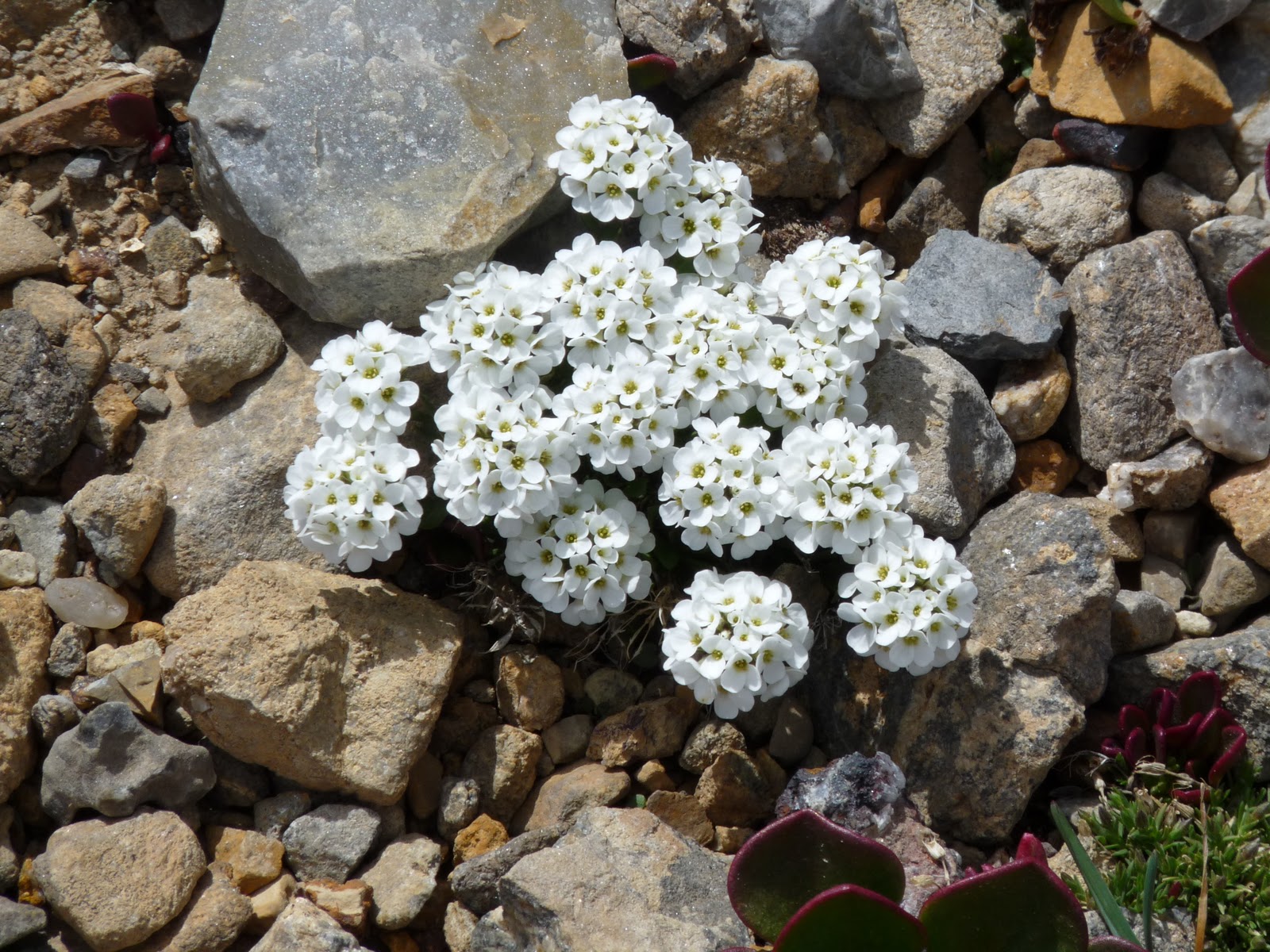
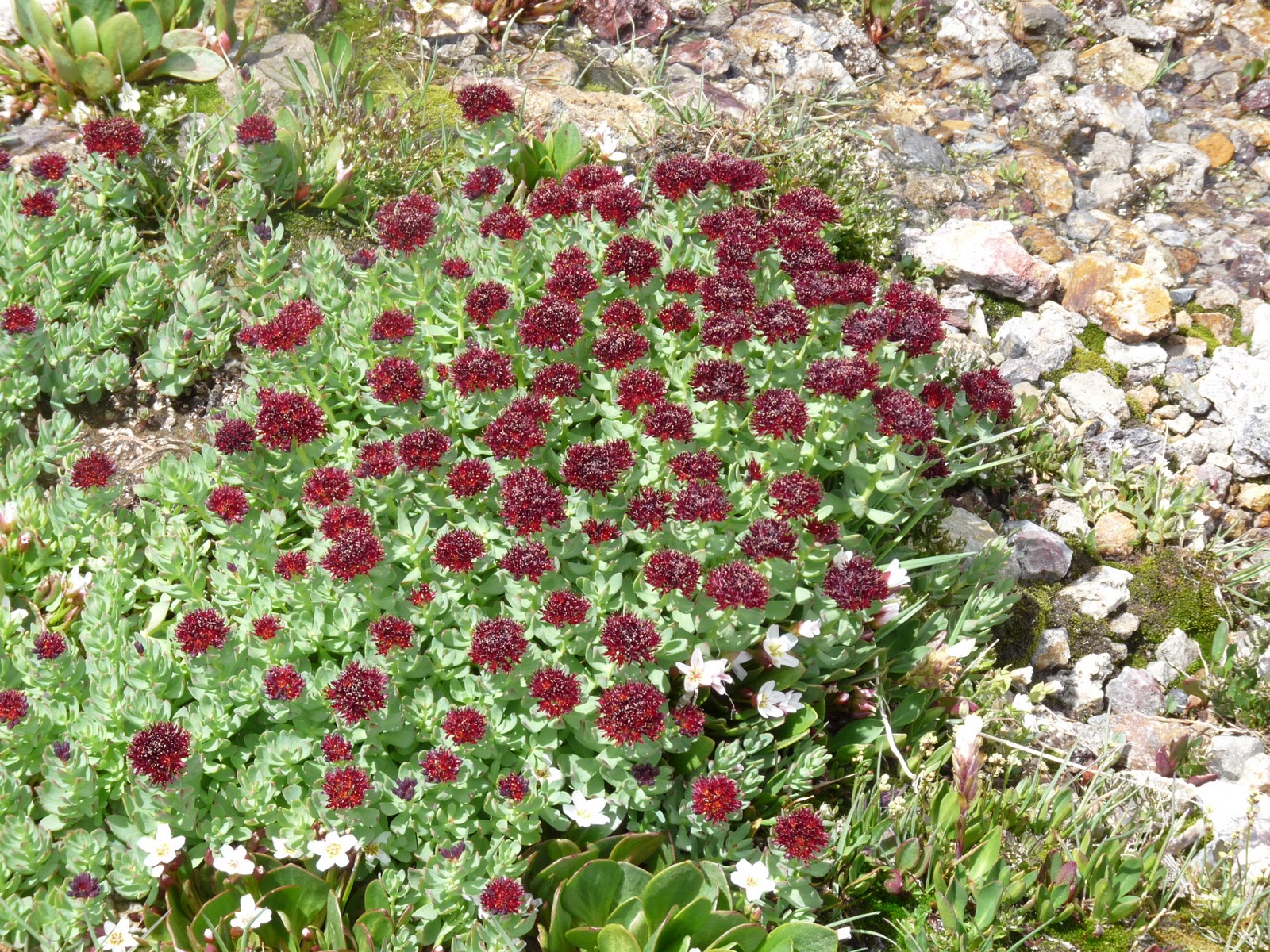


 More beauties from Horseshoe as we climb higherm the first photo shows a particularly nice form of Erigeron leiomerus with an extra row of rays. The odd plant in the third photo is some kind of endemic to Horseshoe and perhaps another place or two, is Saussurea weberi. This plant was in bud, bud later should open purplish flowers. Aster (or Machaeranthera) coloradoensis is a rare species in general, and we didn't see many on Horseshoe, one of the handful of areas where this sprawling pink daisy is found. Fortunately it is well established in cultivation as a rock garden plant. Growing in shallow running water is Ranunculus adoensis. I can imagine how difficult it would likely be to grow such a snowmelt plant of such a specialized habitat in cultivation. Another rarity in nature, but not so hard to grow in rock gardens, is Townsendia montana. It forms little bouquets of daisies which cover the foliage against the stark rocky substrate it grows in. Senecio (or Ligularia) holmii forms attractive little clumps of leathery foliage and nodding yellow daisies. Panayoti remarked how these resemble Cremanthodium from Asia, and I have to concur, they look very much like them and may even belong in the same genus. Its not too hard to visualize the genus stretched across the North American Eurasian landmass before the Bering strait formed ,isolating the ancestral stock to two distinct alpine locations, the Himalayas and the Rockies. The bold yellow daisy known as Old Man of the Mountain, Hymenoxis (Tetraneuris) grandiflora is quite common in the Colorado mountains, and it was abundant on Horseshoe as well. Phlox condensata is also common in the area, and on Horseshoe I found many flat rounded mats of it, most in full flower with five petalled white flowers. Senecio (Packera) werneriaefolius var alpina is yet another one of the attractive yellow daisies of the high mountains, forming a low mat of tightly packed dark green foliage covered with numerous bright flowers. In the last photo, a Frasera speciosa has finally reached maturity, shooting a meter high inflorescence packed with odd but pretty flowers, the culmination of several years of gathering and storing food for its final dramatic act of reproduction.