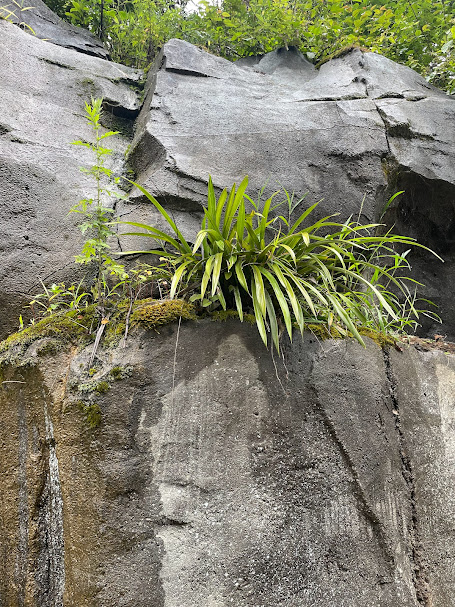
The next day we continued north along route S318 into the borderlands close to the border of the Tibetan Autonomous Region. We never actually got to Tibet but were within Yunnan province in a the Deqing Tibetan Autonomous Prefecture. We first stopped at a roadside tea house where we had Tibetan tea, which is good except for the salt part. Salt is normally added along with yak butter but I tried the unsalted version, not being a fan of salty foods or drinks in general. We then continued on this winding highway and got to the leeward (dry) side of the mountains which would be the northeastern slopes I assume as the rains come mainly from the south. The vegetation changes there to a more dry adapted one. Despite the dryness, this is where we witnessed an actual avalanche. It began with a boulder coming down, our driver halted and waited and sure enough more rocks and soil came down while we watched. We had to wait a while until it was deemed safe enough to continue but it wasnt an overly long wait. Many alpine flowers were seen in genera like corydalis, salvia, along with some special woody plants like more rose species and a beautiful dwarf contoneaster. We had lunch in a small town in the Deqen area before heading towards Shangrila to the east.

Tibetan Tea at a stop along the roadside.


This impatiens resembles the one we saw earlier on the mountain with the big landslide but seemed a bit different.

We pulled off the main road onto a dirt road and found this black fruited Rosa species.

This could be the Tibetan peach, Prunus mira. It has long leaves which is typical of that species andif it is P. mira it can live a very long time unlike the typical cultivated peach trees.

Halenia elliptica is a biennial that is not uncommon in the western regions of China. It can come in various shades of blue to whitish. It is a member of the Gentianacace family which is quite diverse in China.

This seems to be a species of Erigeron but one can never be sure when seeing a plant for the first time I haven't even seen in a book before.

Arisaema species, they really do seem to be everywhere in Yunnan.

Cute little thing, my best guess is perhaps an Ajuga species.

This pretty legume looked more like something I'd expect to find in South Africa than China but here it is. Pretty flowers on a small decumbent plant.

A rather delicate Microseris sp most likely.

Sometimes we came across interesting fungi. Xiao Han knew which ones are edible, I dont recall if this one was. Edible mushrooms are a big deal in Yunnan and China in general.

Gentiana cf tibetica is not one of the showier species but has large flower/seed clusters.
 |

A pink flowered Silene species


A different selaginella species that resembles what are sometimes called Rose of Jericho (S. lepidophylla). There is also a gesneriad, probably Corallodiscus lanuginosus was plentiful in this other spot along the roadside.

Another nice fern, maybe in the genus Pyrrosia.

This appears to be a small Campanula species if not an Adenophora.


Probably a Rosularia sp, its something in the Crassulaceae that looks more like a Mexican Graptopetalum sp.

A dwarf species of Polygonatum.


Amazing they can put electical stuff up on a mountain that obviously slides rather often.

Lacang Jiang (Mekong) river carrying lots of sediment.

Lizard species trying to hide under dead grass but not doing a great job of it.

Incarvillea species. This species was quite robust and liked the drier conditions where it grew.

Lamiaceae species, reminds me of a Teucrium perhaps?

A small flowered species of Salvia. This particular area was near the road but drier than the last spot that the Corallodiscus grew.


Indogifera species. This one was a very flat mat for the genus.


The avalanche we witnessed, I have a video of it on my youtube channel of the same name as this blog.


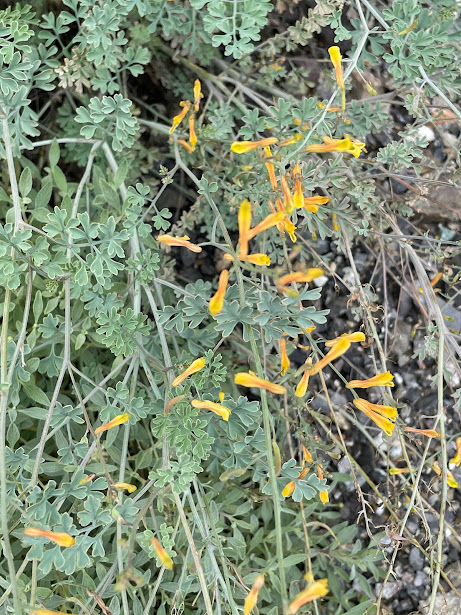
The avalanche gave me a chance to get out of the car while we waited for the local folks to tell us it was safe to go. Found this nice dryland corydalis all along the road.

The aftermath. Now its safe to go.


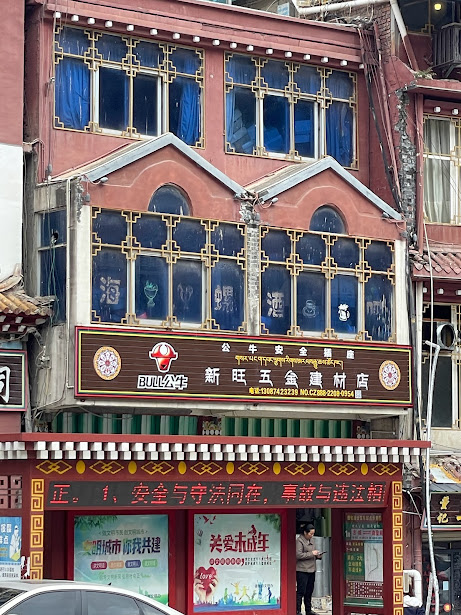
Some buildings were quite pretty


Nice Astragalus (?) species.

Lonicera species with bright orange fruits. The foliage did have a fungal problem that did not seem to affect the vigor of the plants.


Epilobium species, much like our native Fireweed but a smaller growing species.

Another Astragalus sp or a different color variant.

Taraxacum species, likely yellow flowered.


Further off the road downhill was a stream with Primula sp in seed.


Cardamine species in water

Impatiens species growing at the creek edge

Anaphalis species

Taraxacum species, looks similar to T officinalis.

Iris species in seed. This one liked moisture too.

Agastache sp?

More of that nice clumping Aster sp we saw earlier in our trip


More primulas in the creek

Nature creates the best gardens even in human disturbed areas


We wondered what this place was with all the Tibetan prayer flags and small buildings. Of course I was more interested in the plants which follow but later on we deduced this might be a place where Tibetan "Sky burials" happen. Fortunately none were happening while we were there.


A cute tiny white Gagea species among a legume of some sort


A black flowered Swertia species. I suspect it is an annual or biennial.


Cotoneaster species. This is the prettiest species I have ever seen and it was laden with fruit.

This is surely Rosa sericea which I do grow, though my plants were grown from seed from Sichuan.

A species of Caragana. Might be pretty in flower but is quite prickly.

A tiny flowered Wikstromeria or Daphne species

The only species rose we saw in bloom on our trip, also in fruit with nice bright orange hips.