Sunday, July 9, 2023

A Rainy July Day in the Gardens

This has been a strange year weatherwise but that can be said about many places in the world these days. An El Nino is forming and we started with a nice cool and sunny but dry spring into late June when the heat and humidity and rain came back in droves. The heat hasnt been as bad as some other places, mostly still in the 80s but we have hit the low 90s and the humidity amplies the discomfort. Nonetheless there is much color in the garden now, just as there was earlier in the season, only the cast of plants has changed.
This simple daylily is a form of H. fulva grown from seeds that were harvested by Bjornar Olsen in Anhui Province, China. I grew a handful of plants and this is the first to flower. I figure that it is a diploid form of this usually (in cultivation) triploid species. Hopefully it doesnt run like the triploid version but it will need more time in the ground for me to assess that.
Never did figure out for sure what this awesome black flowered daylily is. I got it from Bridget W who probably got it from Manatawny Creek Daylilies. In some years the flowers are mared with yellow streaks from thrips but this year it has done really well. I sometimes spray the emerging scapes of daylilies to reduce aphid and thrip issues which can be a problem when you have a lot of daylilies. I didnt get around to all of them and the drought was hard on the bed of daylilies in one corner of the property where I need to hook up two hoses to reach so not all of them have done well this year. But this tall beauty is within easy reach of the hose and really is looking good this year.
One of my more interesting seedlings, this one has both stipples and stripes. This is its second flower which also shows stripes as did the first so it may be stable in this one. I will keep it, I actually dont have any striped daylilies in my collection though I do have some with stipples.
The waterlilies are looking great and the rainstorms are washing the annoying aphids off their leaves. However I notice some of them have rhizomes which float to the top of the water in summer. I guess the pots I put them in were too small but I did not expect them to rise up like that. I first saw this last year and if I recall correctly, they sink back down come fall. If not I will tie rocks to them and sink them anyway. We now have a sprinker and camera system which has thwarted the raccoons from eating the flowers and herons from eating the fish, thanks to our son in law who is good with such things.
The absolutely breath taking Gladiolus decorus is blooming now. Its a shy bloomer in my experience but a good grower. I got seeds thanks to a kind lady in Malawi some years ago and when I took apart my pot of corms this spring I had so many I was able to make five large pots of them with numerous corms in each. Its a shame the tropical African gladioli are not better represented in cultivation, some such as this species are really quite exquisite and not hard to grow.
Galtonia (or Ornithogalum or whatever genus they assign it to these days) candicans is in full bloom now. Quite hardy and this particular one is really good at making a nice clump, as they dont always do that in my past experience. They make easy to grow black seeds, especially if hand pollinated, and they are easily sprouted and the first year bulbs kept dry in their pot inside for winter in a cool location. They can be grown in pots for another year to get larger or put in the ground that spring. I have never seen it self sow unlike many other hardy South African plants that I grow.
Its the season of lilies, and this is one of the orientpet sorts. It is quite fragrant and an easy grower as orientpets tend to be.
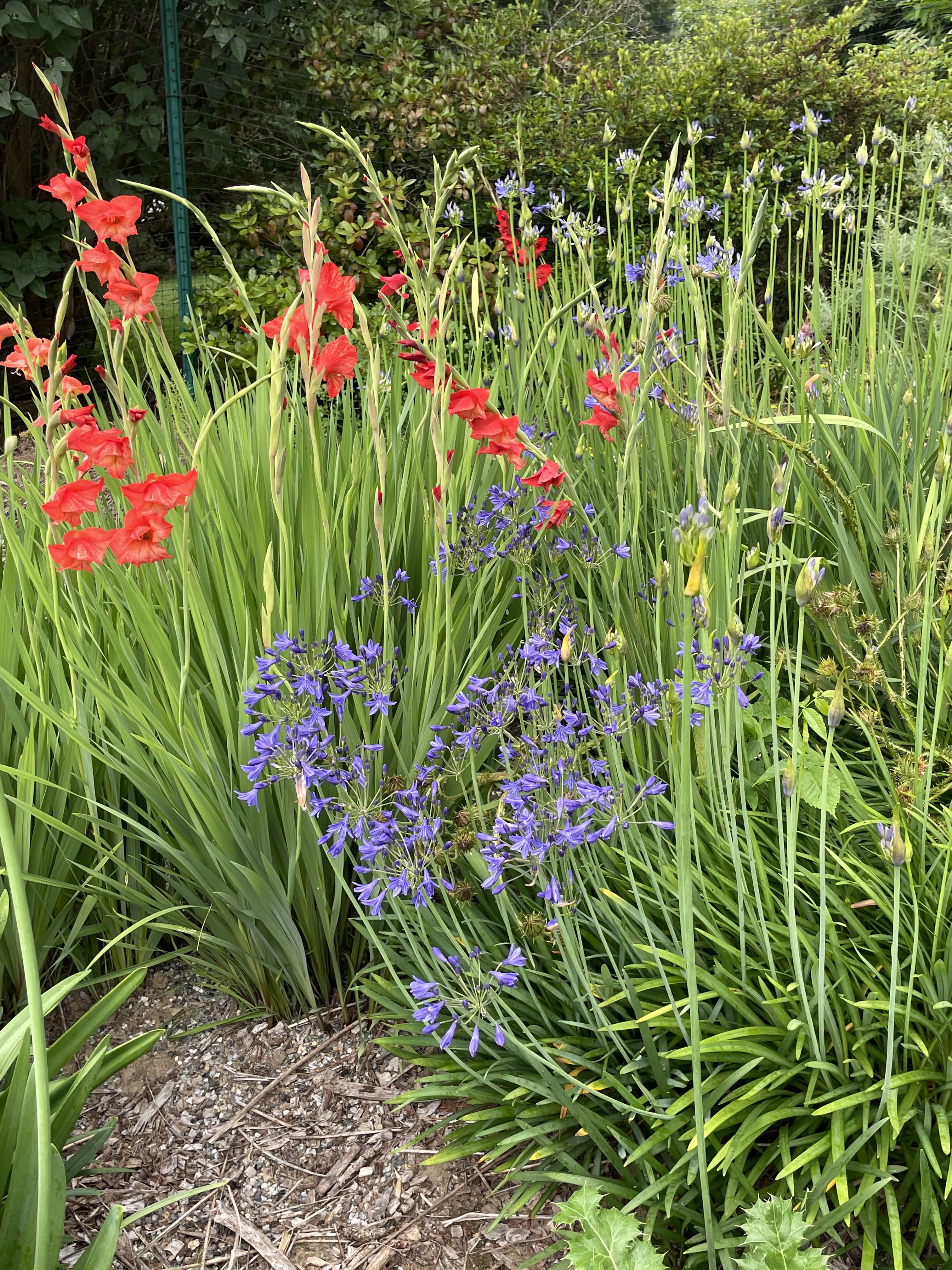
The agapanthus, gladioli, and crocosmia are lighting up the South African garden with color. Offspring of Gladiolus Ruby Papilio often are much like the parent, and there are other hybrids of mine in all sorts of colors as well as some I got from the usual bulb sources. These agapanthus were grown from seed and get some wood chip mulch for winter but dont need a very deep covering such as gerberas prefer here in New York (USDA z7/6 border). Crocosmia Pauls Best Yellow is a nice one and I have unnamed red ones as well in various spots.
My wife really liked this daylily, Laughing Giraffe, when we went to a daylily nursery (I think it was Grace Gardens in Penn Yann, NY) and it has proven to be a good doer.
Zantedeschia albomaculata is the hardiest of the genus and even resows here. I have it in both spotted and unspotted leaf forms. They are pretty much indestructible other than the flowers sometimes being attacked by Japanese beeetles. This year they started opening before the beetles appeared so the beetles are a bit late to the party.
Agapanthus Ever Twilight was a gift from the breeder who arranged to have two each of five varieties shipped to me. Quinton does his breeding in South Africa but these are available in Europe and the USA. It is one of a series that were bred to rebloom, something I have never seen an agapanthus do before. This one has attractive bicolored flowers, here even the buds look good. I gave them winter mulch as they were not bred for hardiness and it worked for most of them. This is their first blooming the year after I got them and I will be able to assess how well they rebloom here in New York, and report my findings to Quinton. Last year was not the best of summers to establish them as it was exceptionally dry but now that they are settled in they are growing well and most are coming into bloom now or will be.

Thursday, December 1, 2022

 The South African Garden in Fall

While South African plants are in pretty much every garden on the property, there is a special garden reserved for South African plants (and occasional interlopers from elsewhere) in the fenced back gardens area.   Here grow many species of plants grown from seeds from South Africa, either collected by myself or from other sources like Panayoti's earlier SA seed hunting expeditions or Silverhill Seeds.  Matt Prinsloo of Bulbomads is another good source and there are some things coming along from him that will mature next year in the South African garden and in other gardens as time goes on.

Our spring was normal in 2022 more or less, but after June the rains just stopped until September with one or two exceptions.  Thus it was an unusually dry summer so I had to hand water frequently with the hoses I have.  There were days I watered from morning till evening to soak the parched soil so I wouldnt actually lose some plants.  Fortunately most of the South African species can take drought and some do better with it than with too much rain.   Still I prioritized making sure that certain species got generous waterings such as Hesperantha coccinea, since I know it grows in and along streams from what I saw when I was last in South Africa before covid hit and our world changed. 

Speaking of hesperantha, it comes in pinks, reds and whites and while it wasnt their best year for me, we did get some nice autumn flowers from them.  They begin to flower in September and keep going until frost gets severe enough to knock them back.  I protect the corm/rhizomes with a wood chip mulch and that allows them to come through even cold winters.  Voles may thin them out at times, they are one rodent pest that I have a hard time keeping in check when they do appear. 
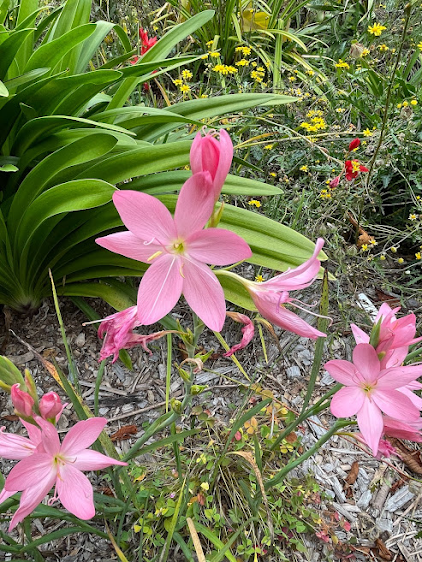


Hesperantha coccinea, a pink cultivar

Gladiolus "Lucky Star" has been hardy here so far and one bloomed later than usual.  I havent gotten it to set seed yet but if it could it would make for some interesting new hybrids as it itself is an unusual gladiolus cross. 
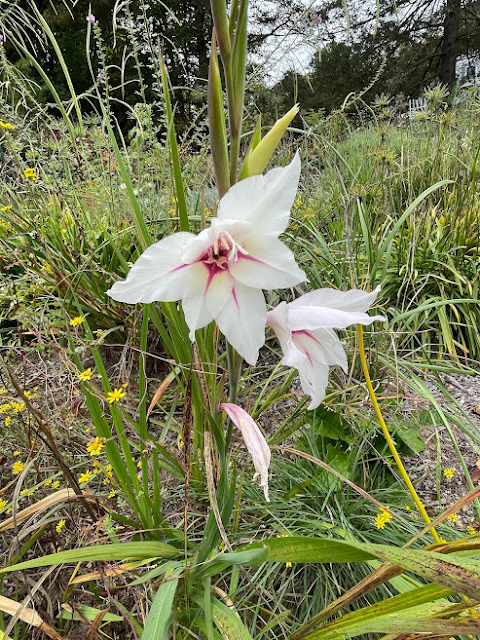
Gladiolus "Lucky Star"

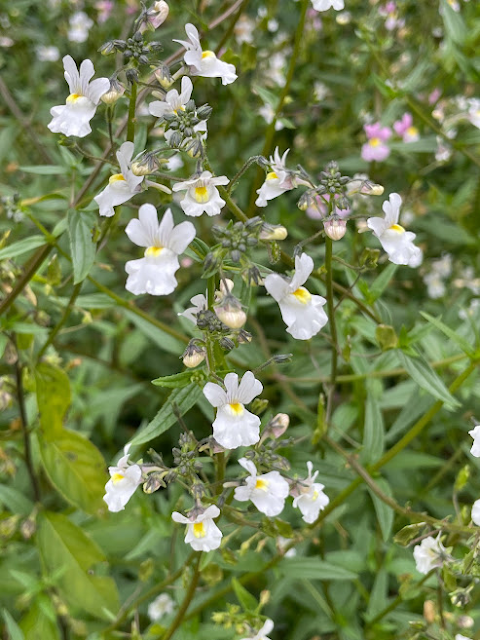
Nemesia fruticosa never fails to delight in fall as it flowers more vigorously than ever.  It sometimes survives a mild winter here and in any case will freely come up from seed in any place where competition is not too tough. 


A late Osteospermum jucundum shows off its lovely purple daisies.  They also come in white as well and will gently self sow.  Harsh winters can damage the mats that the plants form but they recover well and after a mild winter those mats are overflowing with big daisies come spring.  
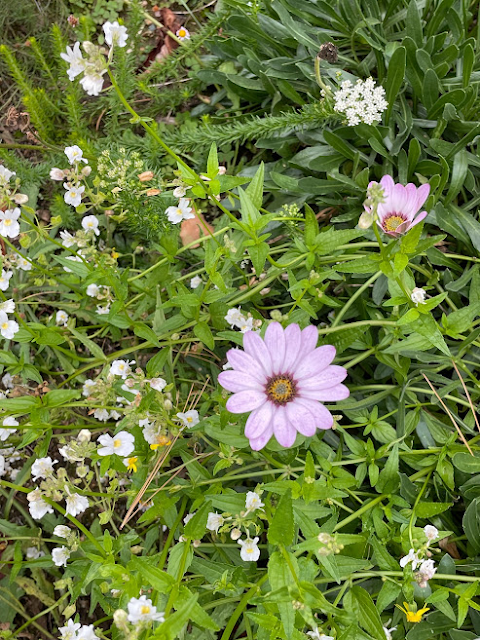
A nice white selago species also is in the photo above, it usually dies out during winter but I can keep it going from cuttings and it sometimes self sows. 

A yellow phygelius, probably Moonraker, really took off this year and has made quite a large patch.  It flowers more vigorously than the red wild form I grew from seeds I got long ago from Panayoti. 


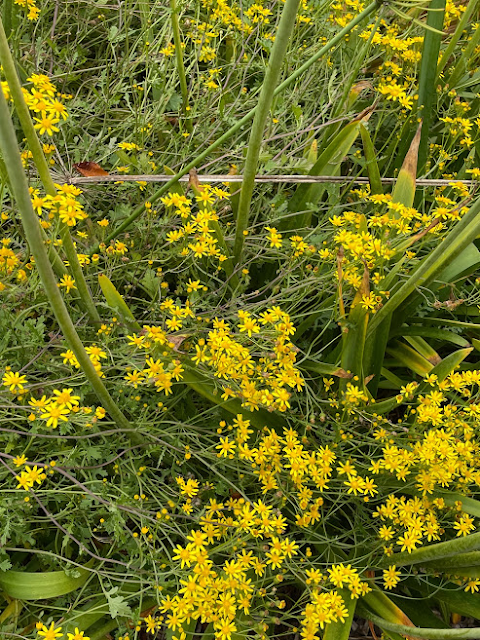
A very free flowering yellow senecio species, name unknown, makes a mass of flowers among leaves of agapanthus plants which poke through the sprawling mass of yellow daisies.  It appears to be hardy and also self sows as do most senecios.  It will flower earlier but it is in fall when it is at its best. 


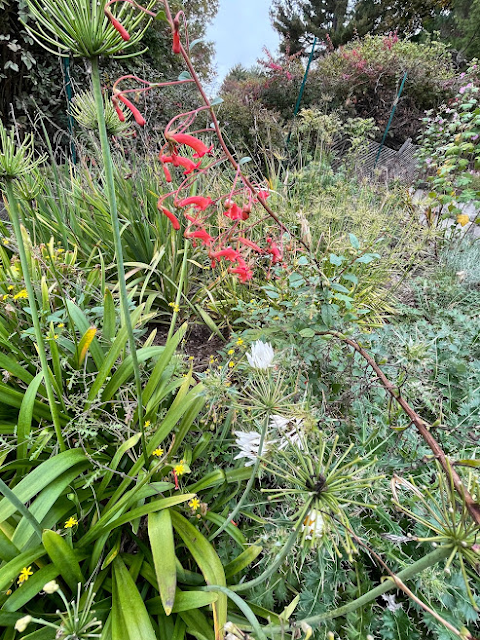
The red phygelius threw a few brightly colored flowers but the patch of it is really too big, its probably three meters wide by now. The one shown below is a seedling from that patch, also to e seen are some late flowers of Berkheya cirsiifolia.  Both are perfectly hardy here in New York. 

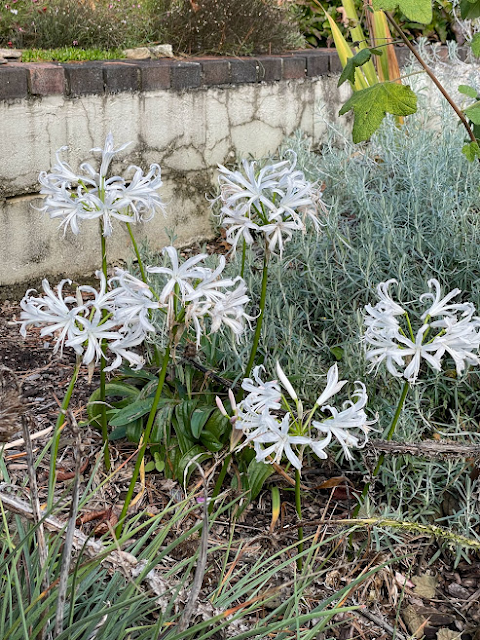
 These gorgeous white flowered Nerine bowdenii came from a friend in the UK.  They always bloom just before frost threatens and frost did take them out a few days later.  We need earlier blooming Nerine bowdenii selections, if there is such a thing.  The bulbs are pretty hardy and get a light mulch for winter but I am not sure if they even need it. Behind the nerine can be seen the wonderful grey foliage of Helichrysum splendidum.  Last winter was hard on them so I cut them back pretty harshly but they grew back with a vengeance.  Milder winters result in no dieback on the helichrysum and after such a winter yellow flowers appear and seed is produced.  They can grow quite huge as well if winter isnt cold enough to check their growth. 


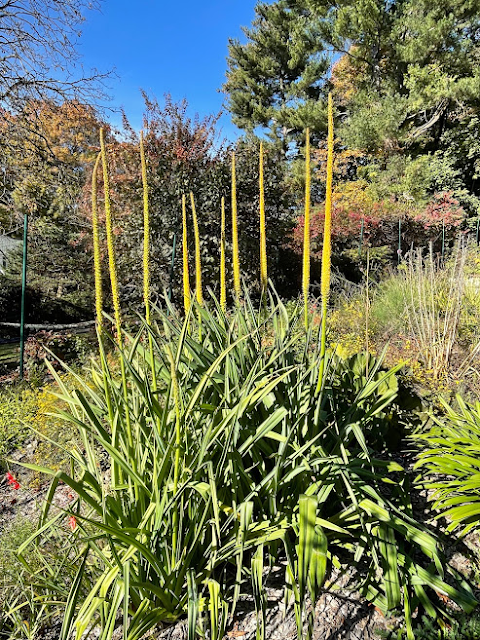
The glory of the fall in the South African garden is surely these two plants of Kniphofia multiflora.  Huge spikes which tower above my 5'10" frame erupt into brilliant magnificence.   I do give it a generous wood chip mulch for winter but its so worth it.  Perhaps it would survive anyway but I refuse to risk it as I like it too much to risk losing it.  I cut the flower spikes just before frost to bring inside so that some seed can be produced, and I have gotten some seed over the years from the two seed grown clones crossing.  I have planted some in the front yard and at least two or three should be large enough to flower next year provided they get through the winter. Of course I did cover them up already so as to increase their chances.  


Monday, February 1, 2021

 Daylilies Part II

As July moves on, different daylilies come and go in flower.  Some will bloom for a very long time, others concentrate all their efforts into two or three weeks, but I will have flowers straight into September with the varieties I grow.  I like to think of daylilies as "happy flowers", they don't ask for much but always seem eager to please.   As a plant nerd who will sometimes go to extraordinary lengths to grow challenging plants that I really like, it is quite nice to grow some plants that give so much for minimal effort on my part.  
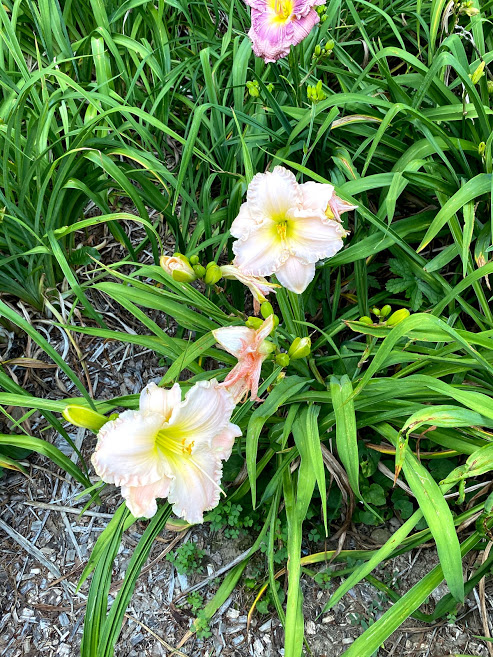

This seedling from Marietta has a great big polychrome flower with nice ruffling.  Its not the most floriferous plant but each bloom is eagerly anticipated.   Smells good too. 


Galaxy Explosion is from Obannon Springs as are most of the plants in the front section of the older bed.  It is one I brought sight unseen and am glad I did.  It produces lots of colorful small/medium sized "spider"/star shaped dark centered burnt orange flowers over a very long period of time.  Flowers well above the foliage, another plus. It could make a good plant in the right spot in a perennial border. 


Small Gesture has lots of double pink flowers with a darker center. 


Brown Witch is one of the few brown flowered daylilies. Brown would seem to be an ugly color for a flower but in person it actually is pretty nice, at least the sort of golden browns that daylilies come in.  A good performer and fairly tall. 


Grey Witch is similar in form, height and bloom period to Brown Witch.  Also a sort of indescribable color, more of a muted purple shade.   These spider flowered sorts do blend better in a garden with other plants than the daylilies with big round ("bagel") flowers or ones with extreme ruffled edges ("chicken fat").  Both of the witches are in the newer main bed near the deck.  Many plants in that bed are late bloomers I got from Manatawny but when I extended the bed I added quite a few more from mail orders including both of the above. 


Ok this is not in my garden, but at a nursery, CT Daylilies, that I paid a visit to in July.   It is an example of a "bearded" or "sculpted" daylily.  Not my cup of tea at all but I do find it fascinating how much human selection can change a simple wildflower in a few generations.  And its good that there are folks breeding all kinds of new flower forms.  Who knows what this flower form might lead to in the future?  People go nuts over cristate growing succulents so why not a flower with such an odd form?   There's lots of room for different preferences, diversity is one of the things that makes gardens interesting. 


There were a lot of really cutting edge newer sorts of daylilies at CT daylilies and they were not inexpensive.  But when I later compared prices to other online nurseries, and also considered the fact that the owner put a lot of extra effort into growing them in pots (which means less transplant shock) and that they were robust plants I realized they were actually priced quite fairly for what they are.   So naturally I left with four new ones for my gardens.   As can be seen they all have some unusual features.  One has a huge flat red flower (Greatful Red) , two others have patterns (Pattern Master-bitone, Nick of Time (purple) that are hard to find (and an active area of breeding at CT daylilies and among other breeders--we can expect daylilies that have kaleidoscope like patterns in coming years) and one is stippled (Spots Before My Eyes-tiny dots of color on a lighter background) and a tetraploid (even less tetraploid stippled sorts than the few diploid ones). 


This gorgeous monster at CT daylilies was one of their seedlings and was going home with one of the workers.   Now this is something different and indicative of some rather far out daylilies to come in future years.  Many, if not all, with this kind of concentric ring pattern have crimped petals but this one is relatively flat and is definitely an advancement from the first ones with this kind of pattern.  Not a perfect form yet but certainly nice enough that I would happily grow it if I could. 


Miss Jessie is an old spider form. I've had it for years and it came from the old house to this one in 2012.   Tough and reliable, its a good and inexpensive one. 


One of my better seedlings, this one has nicely shaped purple flowers with darker veining.  It blooms for a long time too. If I were to change anything about it, I'd like the flowers to be on taller stems.    


 This old classic, Lullaby Baby, looks even better in person.   Its a polychrome tending towards white, but each flower is perfectly shaped and the smallish size is well proportioned to the plant. 


Muffet's Little Friend is an odd sort, and is shown here at Grace Gardens.  Its a smaller one with a wildflower look to it.  I got it and was warned it does spread a bit like H fulva, the common orange daylily one sees everywhere.  I like the small flowers and plant, though the flowers could be a little higher above the leaves.  I put it in a location where it has some Iris fulva nearby (another spreader) and a walkway and the pool to keep it in bounds if that does become an issue. 


Grace Gardens is quite a sight to behold when their large daylily field in in full bloom.   


Santa's Pants at Grace Gardens. Of course I had to get this to bring home.   What a pretty flower and quite distinctive too. 


Our big three day getaway this past summer was to Ithaca when the virus was at a very low ebb and we got to see friends on Cayuga Lake for an outdoor distanced dinner.  The most amazing rainbow we have ever seen appeared over the lake. So it was an amazing trip even though we did not dare eat in restaurants or other usual things we might do.  But between the daylilies, stopping by at our friends place, walking the Cornell Botanical Gardens, and picking up Purity ice cream to eat elsewhere it was a good if short getaway, our only one during the pandemic. 


Rainbow Radiance was looking pretty good at Grace Gardens in spite of a thundershower that sent us scurrying back into the car for a bit.  Got a division to take home. 


The haul from Grace Gardens and another smaller daylily grower in nearby Cortland.  They always look a little ragged after the ride and for a bit after planting as they focus on new root growth.  Next growing season they will really take off. 


This one I got as Athalone seedling from Manatawny.  It definitely has a more of a species look with its grassy foliage and simple but bright flowers. 

Another Manatawny no name seedling from my first of three visits out there so far.  This one I call "Dusky Rose".  Its an odd one, interesting pattern and not that tall   Sets seeds readily. 


Ernest is my name so of course I have a daylily named as such.  I cant say that I would have purchased it otherwise as the color is a bit washed out to me.  But it does have lots of buds per stalk and is a good seed setter so it probably has value in breeding.  And like most of them, almost no effort to take care of. 

Yet another no name Manatawny seedling, this one I call "Glow".  One of the oddest ones I have, small grower with lots of flowers of an unusual shape and with a big eye that really does seem to glow. 


Masses of bloom on July 13, 2020. 


A popular cultivar called Lavender Blue Baby.  It has been used a lot in breeding and is worth growing on its own.  It has taken time to clump up and put on a good display here. 


In its first year after the year I planted it, One Above You is living up to its name.  Tall and with big bright yellow flowers.  I really this one so far.  Came from Willow Rock Garden via mailorder. 

I think I have had Outrageous from my days at NYBG, but it really took off when we moved here and i planted it next to a compost pile.   Guess it likes all those good nutrients.  Its well named too, it one of the more distinctive ones that is easily recognized.  Its also a fine example of a good showy garden plant that is an older variety, readily found, and inexpensive.  
A Manatawny seedling I call "Pink Eye".   It is a compact plant with good habits.  I can only guess it didn't get registered because it isn't distinctive enough?  It closely resembles Janice Brown in flower and plant size, and in my garden I don't have anything else exactly like it so far. 
I had to really hunt for Poinsettia, an old Stout cultivar. I have seen it in the perennial gardens at NYBG where several clumps of it are very impressive in full bloom with many flowers open at once.  It is unaccountably scarce for reasons I don't understand. It has fantastic color and blooms for a long time.  Perhaps it isn't the fastest to multiply for growers (?) or maybe everyone wants "bagels", but it is definitely worth having.  I got a plant with four fans from Willow Creek and planted each fan in different spots in my back gardens.  Three decided to bloom this year, this one being the most vigorous as it is right by the compost pile in full sun.  I had to keep the gem squash leaves (I grow this South African squash variety right in the compost pile) from overrunning Poinsettia's foliage.  

This is what Poinsettia looks like in a garden when its happy.  I took this photo at NYBG some years ago and have been on the hunt for it since.  In coming years I hope my Poinsettia daylilies clump up like this.  It also sets seeds readily and I put quite a few things pollen on them and will grow out seeds this coming year.  


Rocket City is another oldie but it is still grown in many gardens because its tough and very colorful.  Not a plant for pastel borders, lol.  I got mine from my friend Andrew who also worked at NYBG and also got plants from Greg and Mike.  The white one in front of it is a seedling of mine. 

Salmon Sheen is a very old variety.  It is pretty compact, the flowers are nice and have an slight twist to the petals that works in its case.  More folks should grow some of the older varieties so we don't lose them, both to preserve genetic diversity and to reduce the risk that we lose them forever. Not all are worthy of preservation but there are some unique and interesting sorts that really are easy going plants that are no trouble to care for.   And reliable bloomers too. 
This rather nice seedling of mine must have No Where to Hide in its background, the deeply colored veins is strongly suggestive of that. Very pretty flower but I need to move it to a spot with less competition to see what its full potential is.  It certainly has a pretty face. 


Pretty sure this big pink flower is a seedling from my random pollinations (or was it a bee?).  I like what I see so far, so I will keep an eye on this one. 
In another garden near a patio Swallowtail Kite (foreground) and Up Against the Sun are growing into nice clumps.  Both are good plants by a breeder (C Hanson) who appears to have a reputation for producing plants with good foliage habits and lots of flowers.   I'd say he hit it right with these two.  If I had to pick between them I would say Up Against the Sun is the better one as its a bit taller and the color attracts attention from far away.  Swallowtail Kite might be the better choice for a garden with lots of pastel colored flowers though.  

Up Against the Sun is a good name for these big bright orange flowers.

A white flowered seedling of mine.  I like it and its been a decent performer so far.