We pulled in the night before into Shangrila which is a tourist city with a sizable Tibetan section. We looked for a hotel and found one that was a good deal for a very large suite setup complete with a pool table and traditional Tibetan architecture. It did have a sink draining issue but was otherwise pretty cool. And it was cool at night too, temperatues can drop significantly at this altitude even in summer. I used my cpap machine in the hopes it would give me more air pressure but three of the four of us woke up with headaches from the altitude so we decided to go explore the local flora and then go to Lijiang for our final night in Yunnan as Lijiang is at a lower altitude. Fortunately I did not get sick while exploring the flora that morning near a road that went through an area near water and that seemed to be sort of a park or hangout place. We saw some folks dressing up in formal Tibetan dress for photos, most likely Chinese tourists. On our way to Lijiang we stopped by the famous Tiger Leaping Gorge which is where two rivers come together. They made it really easy to get near the river, you could go down and up a lot of steps or you could pay a small fee and use the escalators which was definitely the way to go in my opinion. The gorge is well worth a visit even if it wasnt very interesting floristically on the tourist side, but we could see people walking on paths on the other side of the river where one presumably could see more native flora. When we got to Lijiang, we got a hotel and went out to eat at a local restaurant which featured a mushroom soup with many different kinds of local mushrooms in it, something the area is apparently known for. Alas I did not see the Lijiang Road Rose, a plant of which grows in our home gardens, it is a semiwild rose that occurs in and near Lijiang according to the Martin and Rix book on roses but then again it would not be right time of year to see it bloom as it only blooms in spring in my gardens and would otherwise not be remarkable except for its vigorous growth.

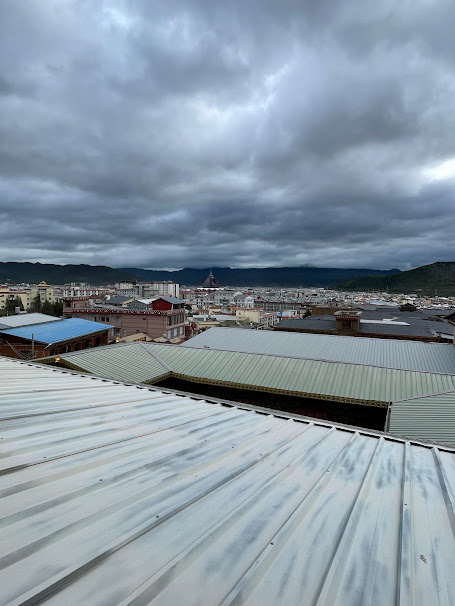
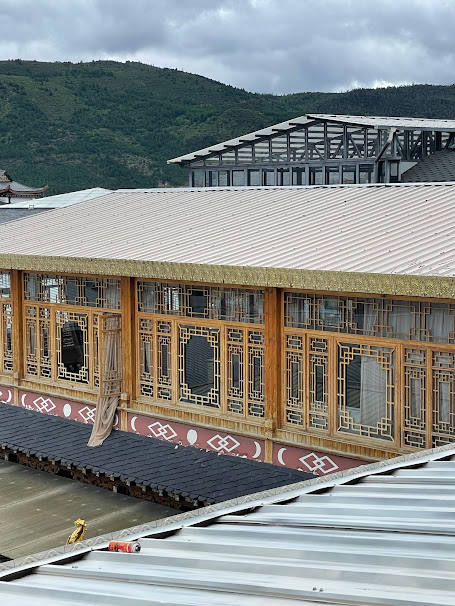

Views from the hotel. We got some help walking our luggage up to our accommodations which was good as Shangrila is fairly high at a bit over 3,000 m or 10,000 feet altitude.


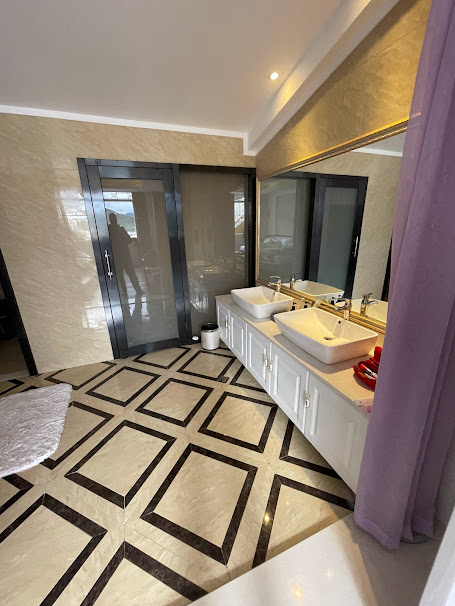

As one can see, there was ample space for the four of us, with two beds in rooms on either side of the main room with the pool table. Each bedroom had showers and a sink as well.

One of the hotel entrances (oddly they had different names), I'd recommend it so long as you check the sinks to make sure they drain correctly. Otherwise is was a very good deal as there werent a lot of tourists there and there are a lot of hotels in town so the competition is strong.
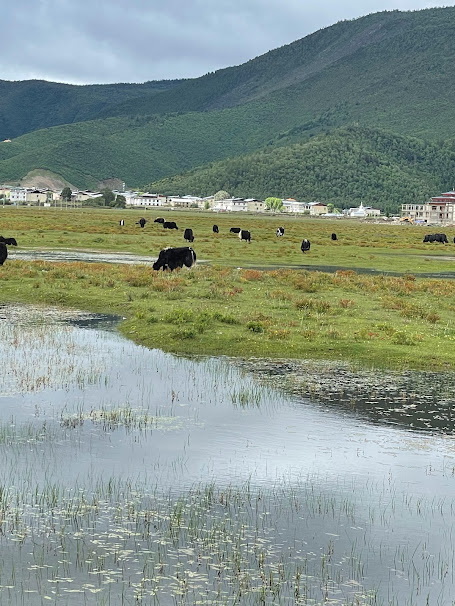
Google tells me this is the Napahai Scenic area/Shangrila Prairie and there were neat plants even in the grazed areas but even better above the Shika Road, I think, that went through the area.

Hyoscyamus niger was safe from the cattle as I believe this is a very toxic species full of scopolamine which is both toxic and hallucinogenic. Cool flower though.


An attractive species of Euphorbia grew here in some abundance as well. It is a clump forming species that propagates from seeds which probably disperse by ejection from the three sided seed capsule as most do in this genus. A few bright yellow late flowers can be seen in my hand, but most were well past flowering and had reddish foliage subtending where the flowers were. Being an euphorbia means having a toxic latex which no doubt discouraged cattle from nibbling on it.

A nice posie of three different flowers including the familiar white clover that now grows worldwide in temperate climate lawns. The bright pink plant was a hemiparasite, a species of Pedicularis most likely. There are many in China, and many are lovely in flower but I dont know of anyone who has ever managed to cultivate any of them. A small yellow legume not unlike Lotus corniculata was also present.

A mystery asclepiad/Apocynacaceae of some sort. The pod gives it away, also probably avoided by grazing animals as the whole family is full of toxic plants that often have very nice flowers.

Some kind of thistle perhaps growing with Salvia dolichantha.

Taraxacum and a small Aster species manage to grow low enough to avoid some of the grazing activity.

A cool structure, maybe a Chorten of some sort, was there along with horses to ride for the tourists.


Clematis rehderiana was growing along a fence where some folks lived. Quite stunning and vigorous.

A small terrestrial orchid, possibly a Spiranthes sp, grew in thick moss at the top of a stone wall.


Finally when we got to the roadside rocky areas we got to see many more species. This appears to be Elsholtzia stauntonii in its white form. I have had this in my garden for several years, its a woody small shrublet that can seed around, it also comes in a pink form which I have not grown yet.

Cool Silene sp with very fimbriate petals.

Most likely a species of Scabiosa, not unlike ones I have seen in the South African highveld


Another rose with red hips, might be R sericea though its late for that species to be in fruit.

Adenophora species, these Campanula relatives are pretty widespread in China.


A green flowered orchid probably in the genus Habenaria.

A pretty late blooming Viola.


A few late flowers on what I think is Daphne calicola. They were not uncommon among the rocks on a slope.

A minature fern that might have been Cheilanthes argentea although the leaf is paler than more common forms of it.

Another fern in the rocks, this is a small Pellea sp perhaps.

Another Pedicularis species, taller than what grew in the more grazed areas we saw before.


The prettiest Onosma species I have ever seen. Most of the ones in cultivation come from the Mediterranean region and are yellow in color.

I could not get a really good photo of this small Salvia species or something related to Salvia.

A tiny Roscoea sp in seed. The seeds are in a capsule that opens at ground level.

As always, there is a legume somewhere in the crowd. Not sure what genus this one is in, dont think its an Indogifera.

The little near black Swertia sp we saw earlier in our trip also grew here.
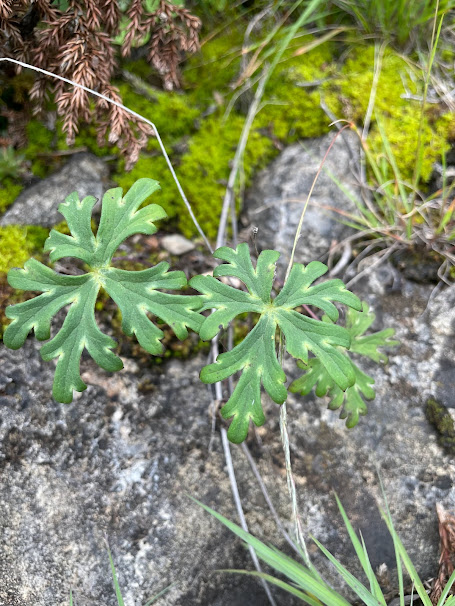
Nice foliage of probably a Delphinium species.

Silene species growing among some prickly leaved plant.

Apiaceae, not unlike wild carrot in overall appearance

Delphinium sp.


On our way out of town we drove by this huge Chorten. Quite impressive and beautiful.


This sign made me laugh, as if anyone would have a chance in hell of getting to the other side alive. Trust me, that sign is to be taken seriously!


Did get to see some Arisaema near the path.

The water really moves in some places


We leave Tiger Leaping Gorge to get to Lijiang, our final destination

Lijiang


Mushroom soup, a well known local dish, a nice dinner as we prepare to fly back to Beijing.
